And more behind the amazing video I shared!
A neighbor mows his grass this afternoon on property that has a rich history, but only fairly recently anything like lawns. It begins about 500 years ago when the Potawatomi (with other tribes) migrated from the Atlantic seaboard to millions of acres around the Great Lakes, including what is now South Bend (https://pokagonfund.org/a-brief-history-of-the-pokagon-band/). The community thrived, largely through farming and fur trading. In the South Bend area, the Pokagon Band of the Potawatomi managed to negotiate with the European settlers after Congress passed the Indian Removal Act in 1830, but had to give up most of their land in order to stay, in part with someone named “Coquillard”.
A resourceful pioneer and fur trader and one of the founders of South Bend, Alexis Coquillard took over (or bought for a pittance) more than 720 acres of their land (South Bend Tribune) and built a homestead. And although he earned his riches trading furs with the native people, he became a removal contractor capturing Native Americans who had escaped removal to the west (Sleeper-Smith, 2001). He died in 1855, at the age of 59, from a head injury after falling from a beam in his flour mill after a fire. Coquillard was born in Detroit and was of French-Canadian descent and according to the South Bend Tribune, “Coquillard Woods” was a common site for picnics for French immigrants and their descendants in the area until the 1920s.
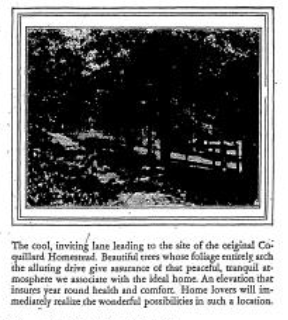
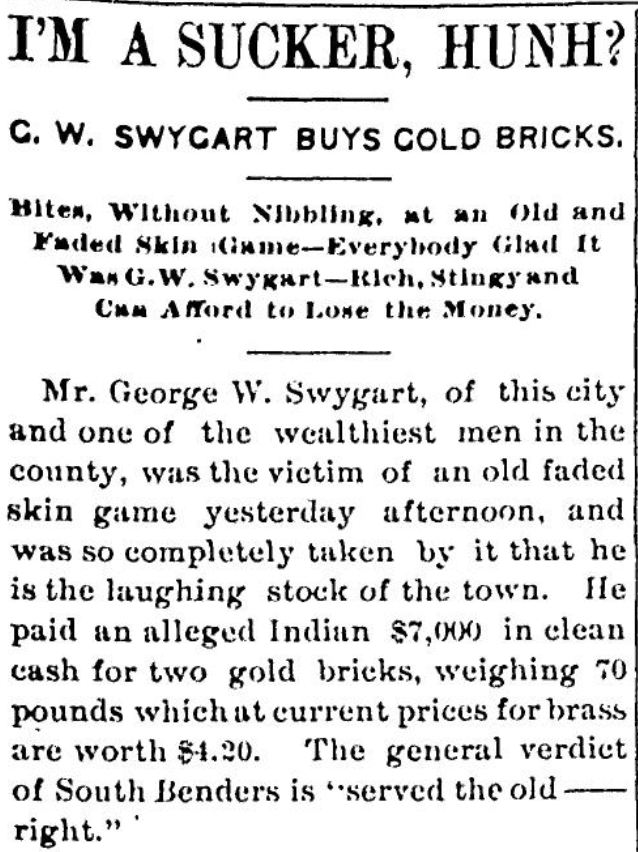
Before developers sought to turn the Homestead into a new residential area, the land was largely vacant countryside on the north side of the city border, then McKinley Ave. In addition to hosting “French Picnics”, the South Bend Tribune in May, 1892–at the top of the front page, no less–gleefully tells the tale of how “rich, stingy” G.W. Swygart was swindled by a group of conmen duping him into buying “gold bars” that they tested–and subsequently ripped him off for more than $7,000–in Coquillard Woods. (That’s about $235,000 in today’s dollars.)
At least according to the South Bend Tribune, Coquillard Woods was safe from swindlers or other activity until the mid 1920s, when developers bought 720 acres and successfully had the city annex the property to enable city services like water, sewer, and electricity. From 1923 to 1926, the Coquillard Land Company advertised nearly daily about their progress building roads, water, sewage, sidewalks, electricity, etc. to drum up excitement for future potential buyers. This was, of course, a booming economy at the time and as the ads touted, the new development would be far (about a mile in reality, but no matter) from the dirt and grime of the city. It worked! As I explained before, the open house for the first home, built in 1927, viewings had to be extended two days to accommodate the interest.
But before a development can become a neighborhood, it needs residents. One of the first residents of “Section A” of the development (our neighborhood) were Perry and Onnie (Ontario) Peck and their children Betty and William. They moved into their new house on the corner of McKinley Ave. and Esther Street–331 N. Esther–either late 1927 or early 1928. Their next door neighbors, Glenn and Agda Welch, wouldn’t build their house, our house, until 1936. (My thanks to Daniel Argue, grandson of Perry and Onnie and another fan of genealogy, who shared the photos and video with me and gave me permission to share their story, such as I know it!)
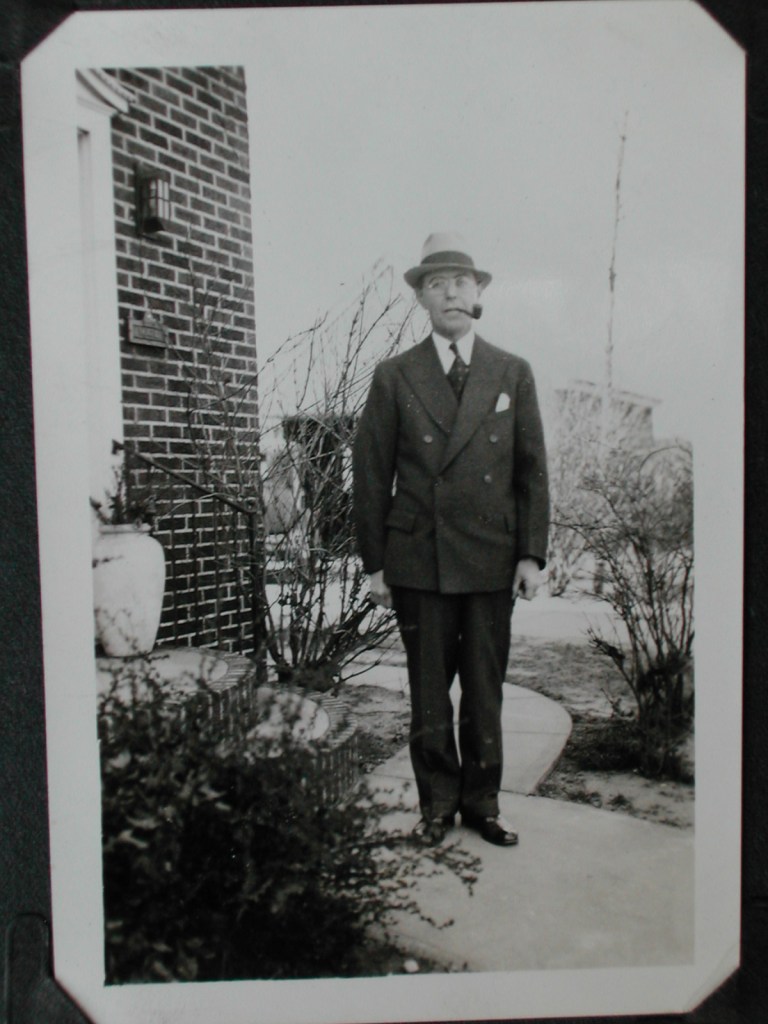
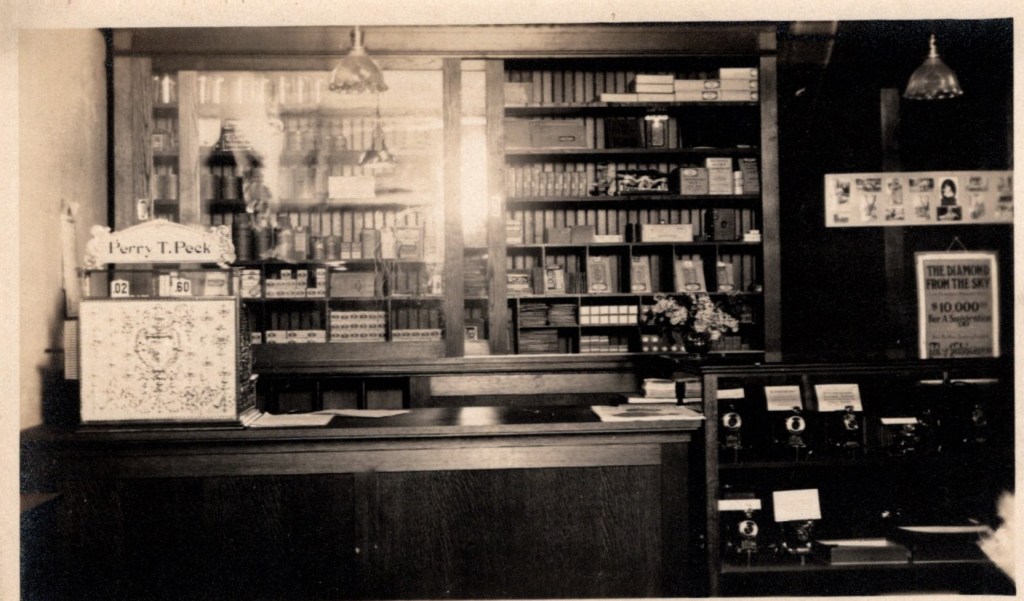
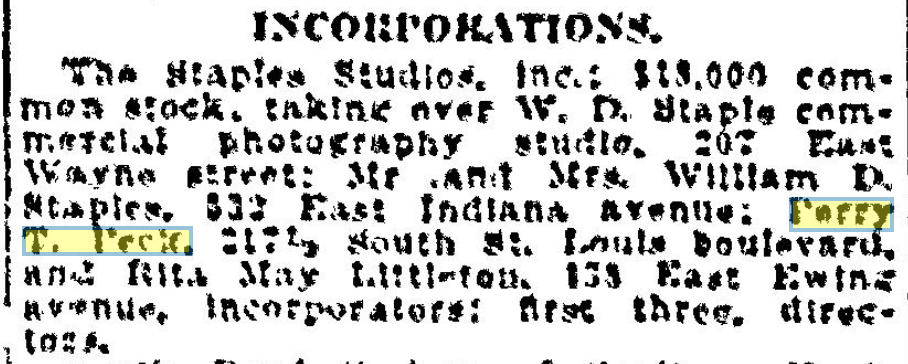
Perry Peck was a commercial photographer at Staples Studio, which was in high demand at the time. Here is a photo of the studio shared by Daniel Argue:
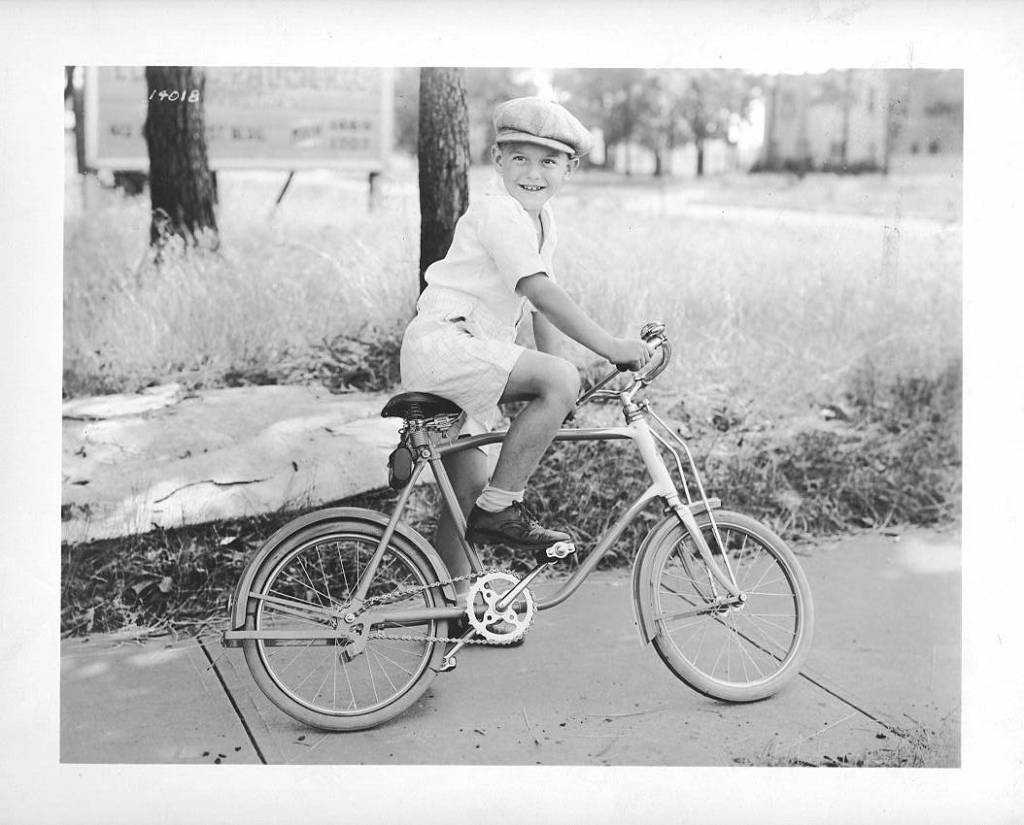
A couple of months after the Pecks moved into 331 N. Esther, Onnie gave birth to a daughter, Mary Elliott Peck and then several other children. Mary Elliott was Daniel Argue’s mother and she is the young star of the movie from 1930. She married a then-aspiring doctor who was studying at Notre Dame. Together, they had 12 children and was nearly 100 before she died earlier this year. Below is the full movie where you can see the happy mother and children enjoying the neighborhood before a family dinner complete with sets of Bill and Mary’s grandparents. After the video, I’ll share some of the cool things we have found out about the neighborhood after we studied the video closely.
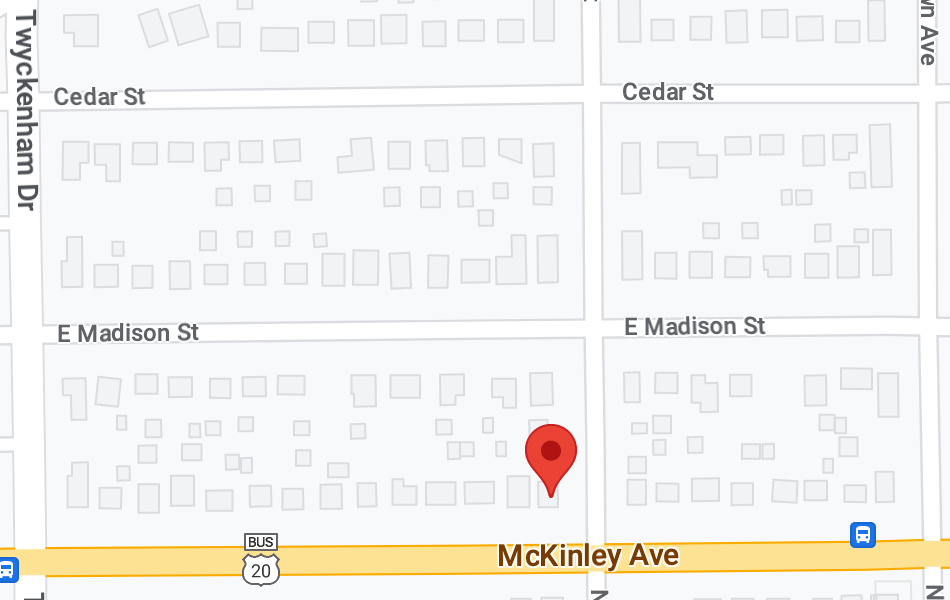
Early on in the film, you can see in the background behind their garage (beyond where our house would be bulit in 1936) that there is what we first thought was a barn, but we were confused by the perspective. Dan (Minds) actually found what is, actually, one of the other first houses in the neighborhood, which is on Cedar street a block and a half to the north. At this point, I will pause to add a map so that readers can orient themselves. Our house is on the corner of E. Madison and N. Esther. The red dot highlights the house at 331 N. Esther:
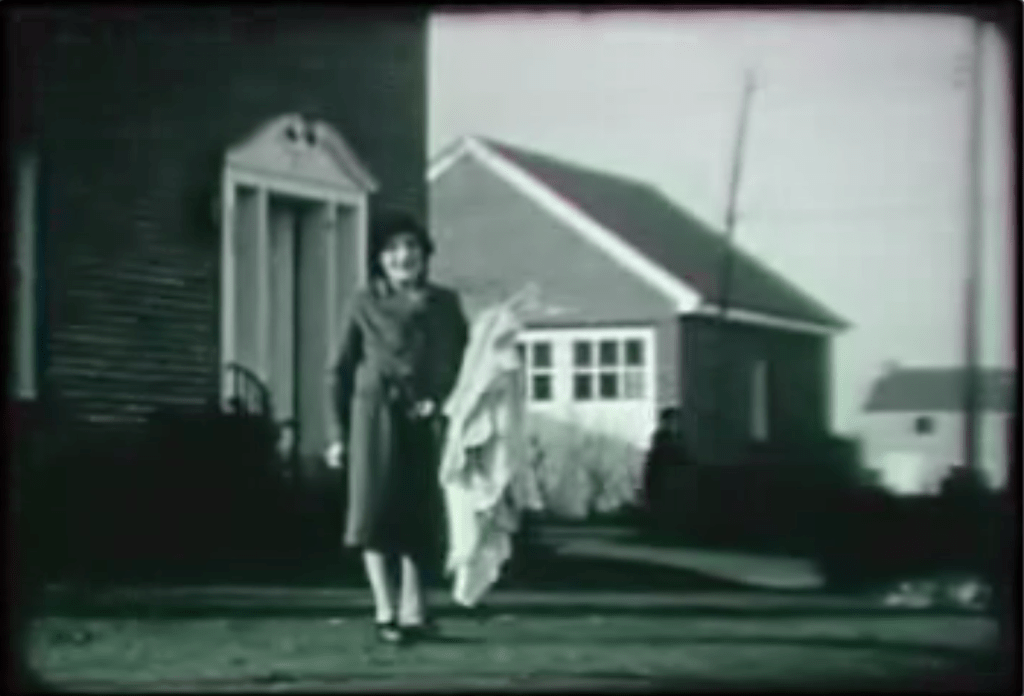
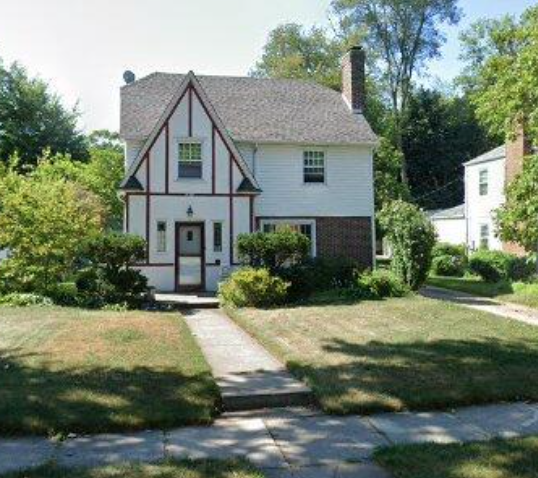
We knocked on the current owner’s door to share our findings, but no one was home, alas. The first owners of the house were the McGowans, who later moved to Cincinnati.
One mystery to us was the new brick home (on the left in the grab from the film) while Becky is bicycling by with Mary Elliott:
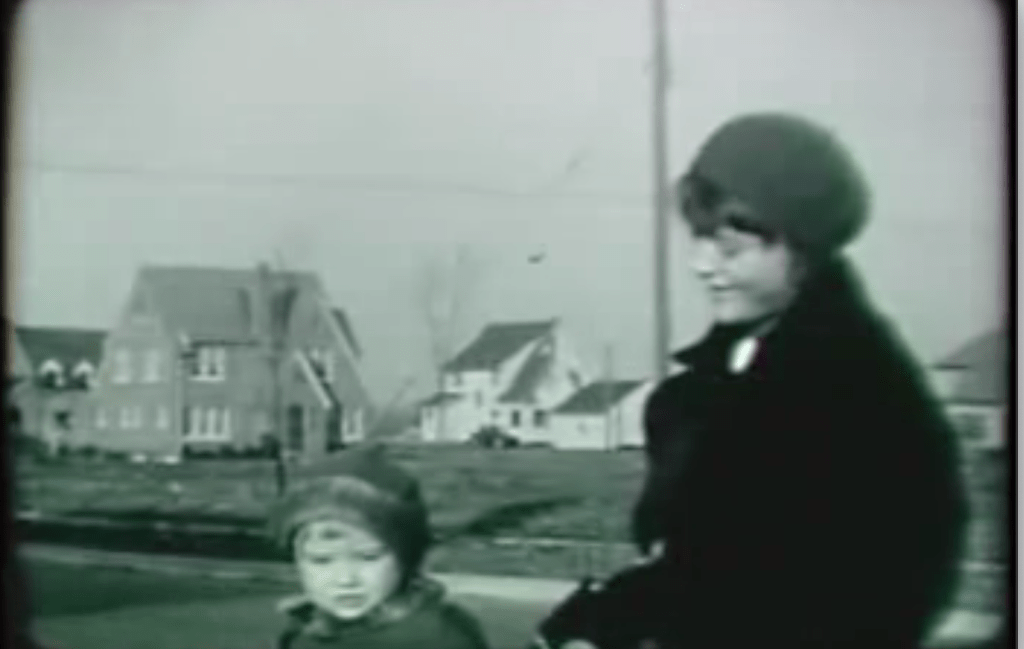
I figured that because Perry was filming, it couldn’t be terribly far from the house or he would have had to jog while shooting. So I went off on a walk to see what I was missing–and of course started out in the wrong direction. Because of the perspective, the brick house looks like there is a brick wall sticking out of the front (I was wrong). But there is a house a couple of blocks away that does have something that could look like it, so I started there. Nope. I was about to give up but decided to end my walk on E. Madison Street from Greenlawn west to N. Esther before turning home. Just before I turned onto Esther, I found it! Again, perspective and the lack of other houses threw me off. The house is about four doors from ours at 1709 E. Madison. Here it is today:
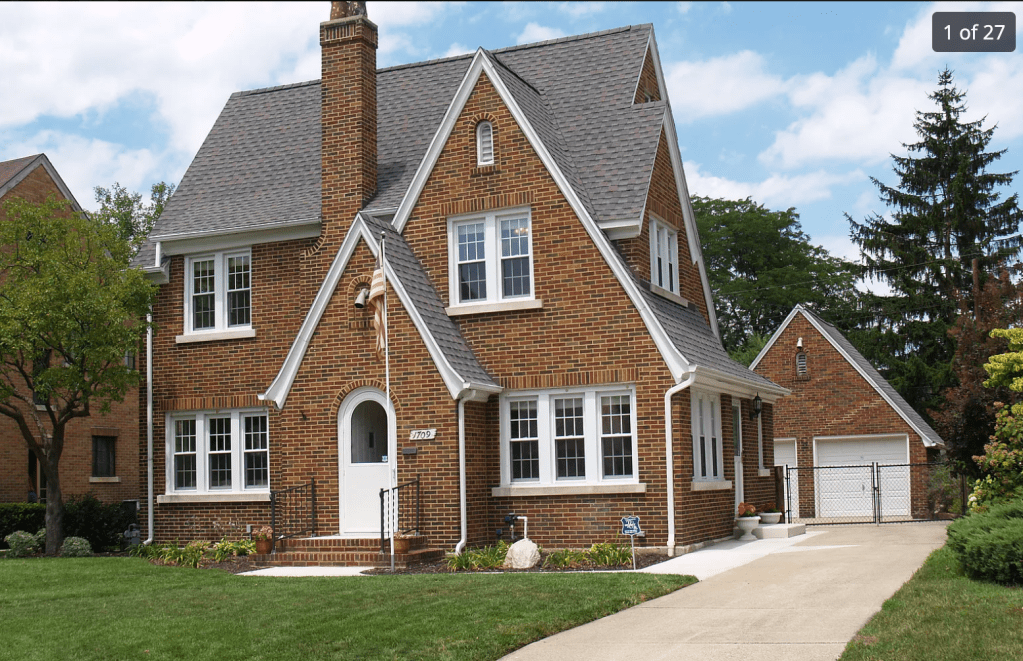
We have met the owners in part because last summer, they had the same remodeling company work on their house last summer and we had stopped by to ask them what they thought about the company’s work. They loved it. Late yesterday, I asked the carpenters who have been working at our house for weeks if they had also worked on this house, and indeed one had! He showed me a photo he had taken of the finished work; it was lovely.
This house was for sale beginning in early July of 1928 but repeated ads for the house suggest that they builders were having difficulty selling it. This was one of the homes designed by a locally famous builder, Eric Johnson, and this trouble selling seemed to portend what we know now would soon come: the crash and Great Depression. The first owners that I could find on record was in 1931, to R. Flake Baity and his wife. He was assistant manager in charge of retail sales for the South Bend Division of Standard Oil, according to the South Bend Tribune in a story about him being transferred to Detroit in 1934. Quickly looping back to the Pecks, this means that their immediate neighborhood was theirs alone for at least three years.
After the sale from Johnson, the builder, to Baity, ads noting Eric Johnson fade from the Tribune until a series of small classified ads offering painting and home repairs. It is very possible that he lost his job with the construction company he worked for as the Depression continued. In 1935, he and his wife lost their home to foreclosure, according to a sheriff’s sale notice in the Tribune. Later stories–again often in the society pages–show a rallying family with five children. Eric, however, caused a bunch of car accidents, including running into a bus, causing repeated $5 fines. Slow down man!
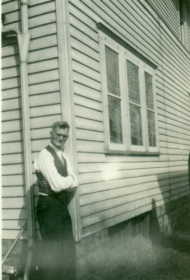
But Eric didn’t slow down, figuratively speaking. In fact, he lived to be 100 years old and passed away in Florida where it appears he was visiting one of his daughters. His obituary highlighted his lifelong passion for ice skating and his popular demonstrations at Howard Park.
By the 1940s, the strengthening economy helped many more homeowners build and move to the neighborhood. Glenn and Agda, who appear to have been relatively wealthy, managed to build their new house in 1936 and were neighbors to the Pecks for about 20 years before Glenn died and Agda moved to California with her daughter, who lived next door in a house her parents had built for her. I have found no record that they socialized in the society pages, but they would have been of relatively similar ages. However, Perry Peck died in 1949, which might have minimized socialization.
End note: a special Thank You to Daniel Argue for participating in this effort to document at least a sliver of the history of this neighborhood and honor his family’s heritage in the process!
An additional note: my sister replies in the comments that the Potawatomi were also major landowners of the areas that we grew up in, Winnetka and Glencoe, Illinois. This is particularly interesting because the South Bend Tribune notes that the developers of Coquillard Woods were major developers of the North Shore (where we lived) of Chicago and used that as evidence of their skills to advertise in the South Bend development. I will explore any connections!


 1936into2023
Leave a comment