Buying a home is filled with assumptions, at least someone confirmed by inspectors. We assumed the unfinished kitchen floors were oak (no). The inspector said the roof was sound (but neglected to tell us that it was toxic asbestos). We knew the siding was wood, but we imagined it was pine given the prevalence of the wood in the area both when the house was built in 1936 and now. As an aside that will become relevant soon, I recall a neighbor lauding replacing wood plank siding with aluminum for easy upkeep. I disagreed, lauding myself the sound dampening and insulation of the wood. Here again is a photo of the house early in its life, although it is undated:
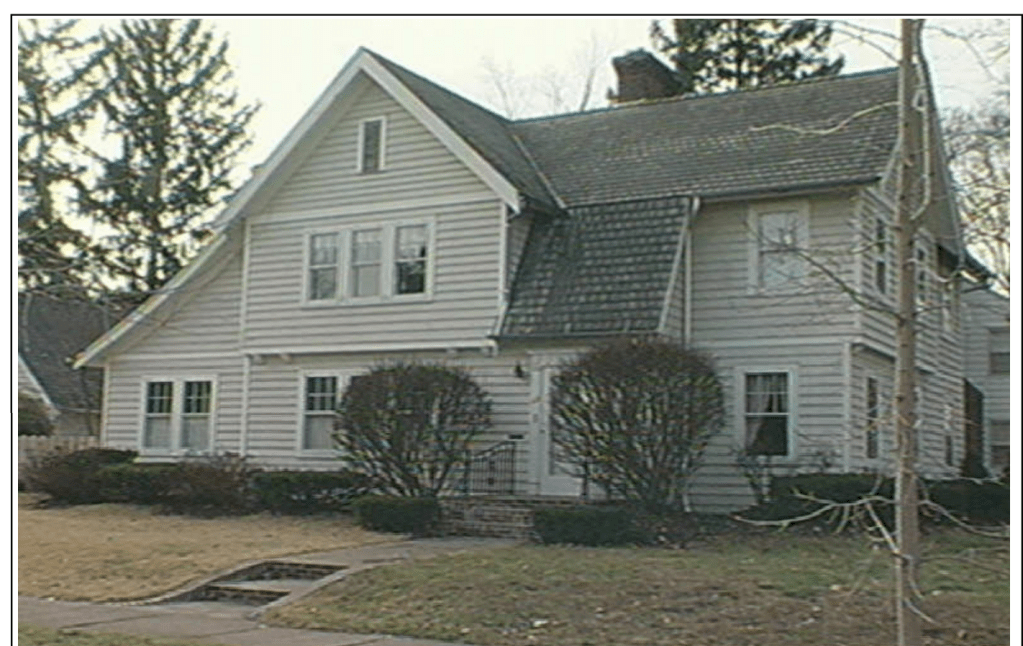
As the crew built our new addition and continue to finish it, J2 asked me whether I wanted the cedar siding to be smooth-side out (as the house is) or rough-side out. It was only then that I knew that the house is sided in cedar! Cedar is a great choice for siding because it is very durable (see later), bug resistant, water proof, and provides superior noise and temperature insulation (Northern Log Supply n.d.).
All good news. Today, J2 showed me the logo on an original cedar board that they had removed from the original back of the house, but kept to reinstall on the new addition. (Note this: this company is not just rebuilding with a nod to history, but being careful to re-use historical and completely usable original features!) Here’s the photo of the plank that J2 did, indeed, reinstall on the house:
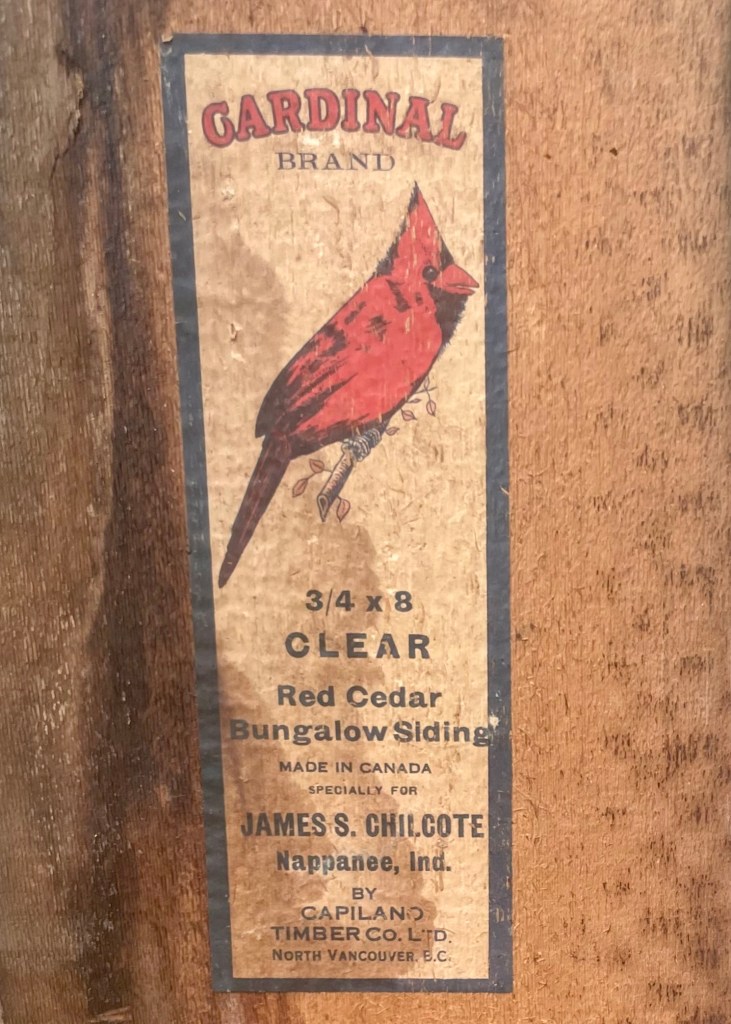
My research showed that the Capilano Timber Co., established by a Chicago-based lumberer named A.B. Nickey—which had been a significant lumber entrepreneur in the Midwest (Kahrer, 1988) in the forests dense with cedar in the mountains north of Vancouver, British Columbia, beginning in the late 1900s. “Capilano” is the name of the river through the forested mountains. The company used many updated technologies in the early 20th Century to rapidly transport downed trees down the difficult, mountainous terrain, but loggers were still cutting down trees with hand axes of several types. (The chain saw was not developed until after WWII technology.) At the same time, the economics of logging caused so much mining that at least for decade, the mountains were clear cut and faced frequent, devastating wildfires.
But years before this cedar from the mountains of Vancouver came to be on our house, the Great Depression happened and the Capilano Timber Co. ceased operations in 1929. That means that at least this original piece of cedar siding had to have been milled, shipped—and certainly stored—by or before 1929.
At least 94 years old, the cedar is not growing old nearly as quickly as Dan and I are!
References:
Kahrer, A.B. (1988). “Logging and Landscape Change on the North Shore of Burrard Inlet, British Columbia, 1860’s to 1930’s. (Ph.D. Dissertation)
Northern Log Supply: https://www.northernlogsupply.com/log-looks/posts/benefits-of-using-cedar-wood/ (Retrieved June 1, 2023)
 1936into2023
Leave a comment