You took a shower today without thinking about it at all, right? In 2023, we wake, eat, shower, and brush our teeth (in whatever order) every day. Commonly, we shower (not bathe) in either a bath/shower combo or a dedicated shower. Demolishing our master bath has given us some insights into bathrooms of the past!
Our aged, jury-rigged, poorly renovated, and barely functioning master bathroom is nearly gone after a long, LOUD two days. Here’s how the previous owners marketed the space when we bought it:
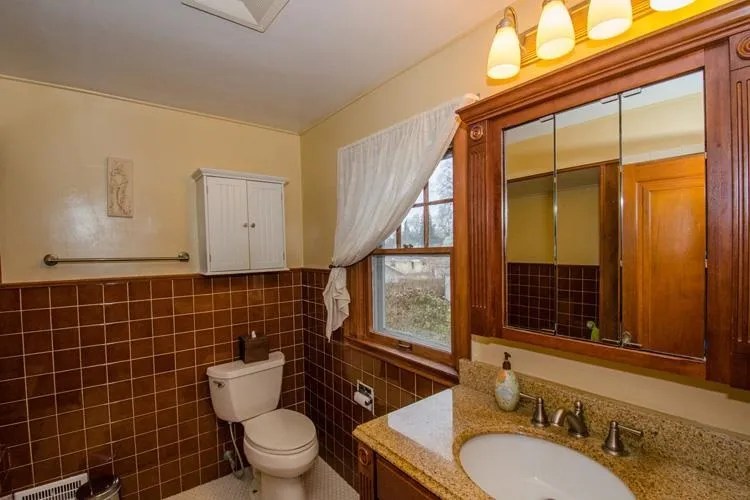
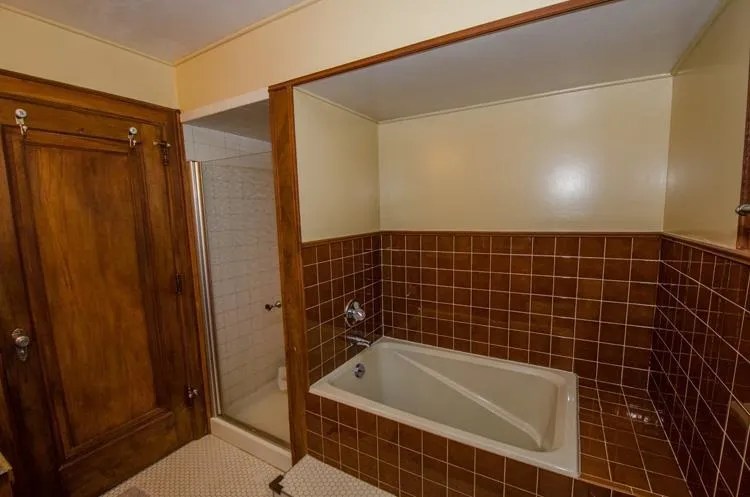
We knew from the first viewing that we would have to renovate this space. It has (had) a walk-in shower, a deep (but weirdly shortened) tub with a step with no apparent use. The decor was, um, sad. What we didn’t know until we used it for years is the plumbing was a mess that just got worse. It is also the only bathroom on the second floor, so needed to be not just functional (and blissful) for us, but for any guests.
One thing that we’ve learned after years in the house is that the trim around the bathtub area was incredibly poorly installed and–when they fell off while cleaning–showed that the tub surround formed a false wall. In other words, the space used to be bigger. For the second time during this renovation, we are learning that previous renovators just stacked stuff on top of something else, rather than actually recreating the space. We didn’t know the half of it, until demo began today.
When the trim fell off–again while cleaning?!–we could see that there had been cutesy wallpaper on top of plywood between the original, yellow wall tile in the tub surround. It was floral with blues and yellows. (I took a picture, but can’t find it.) We had no idea until demo that the original wall had yellow tiles that someone had covered with plywood and then installed over that brown tile. A future resident installed (poorly) cabinets that didn’t fit, but fudged with crappy pieces of trim.
The original tile, which we can know as original because it is against bare plaster, was yellow with a row of black tile at the base. Given the time, the bathrooom likely had a pedestal sink (in either white or yellow–these colors were common in the 1930s when indoor plumbing was just becoming ubiquitous and fancying up the space was cool! And yet, showers were mostly handheld affairs with a tub, such as this:
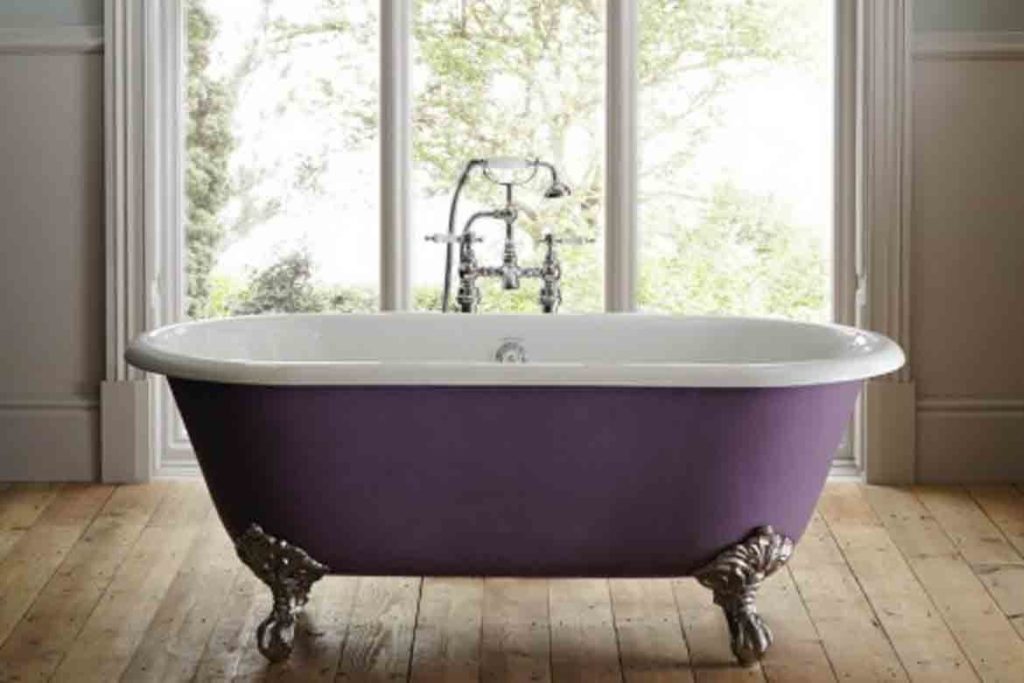
It certainly wasn’t purple or ornate, but the “shower” was likely the handheld one, especially for Glenn and Agda who would have known indoor plumbing as a luxury. They also could have had–although it was not common at the time–a bath/shower that had a raised handheld shower in the bath that had a wrap-around drape. We can’t know.
Thanks to J2, one of our contractors who know we care about the house history, he found some clues! Stashed in the wall between our (now demolished) linen closet and the shower stall were newspapers from 1961. Newspaper was a common insulation material for DIY renovators at the time, so we are fairly certain that the shower stall–which would have been new–was installed in 1961.
Another artifact was a plastic bag, also used for (gag me) insulation:
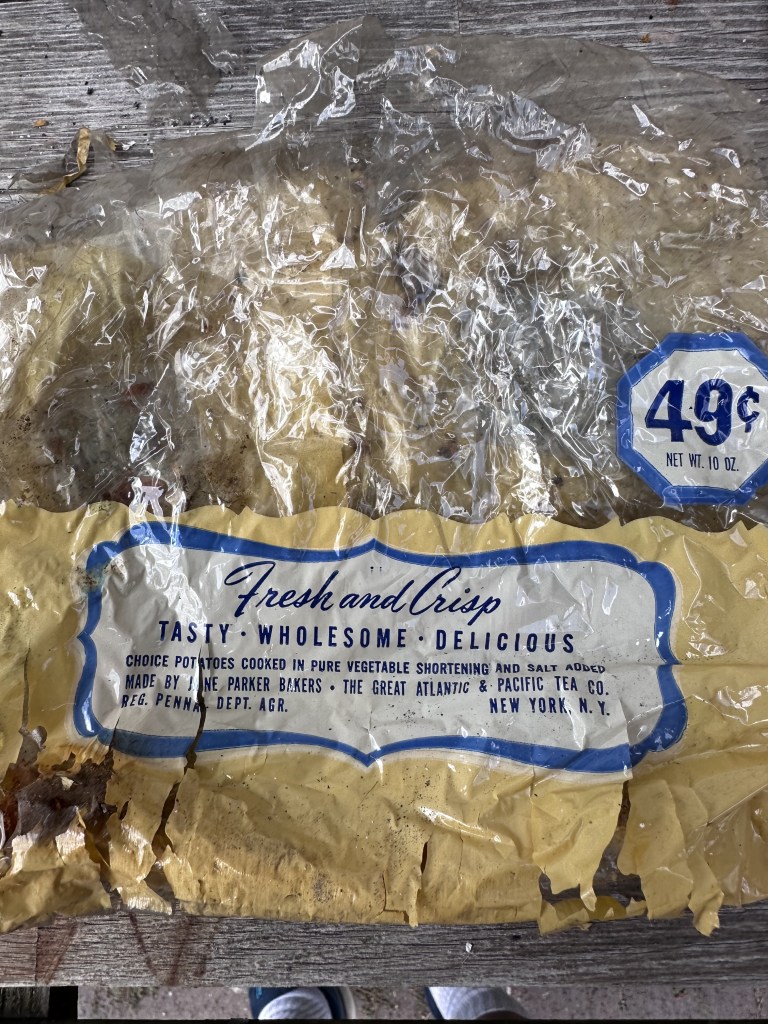
This is a potato chip bag from A&P, a common market at the time, although it would die soon. Think of Aldi as a reference, although both Dan and I remember neighborhood A&Ps being common in our childhoods–we are old. A&P, an early discount market competing against what were a ubiquitous neighborhood market, died near the 1970s after losing to full-service markets in the 1980s.
Our bathroom and nearby closets are now gutted. I will share later how that looks as we move our master bathroom from the 1930s, through everyone’s attempt at fixing, through to a place of comfort.
 1936into2023
Leave a comment